


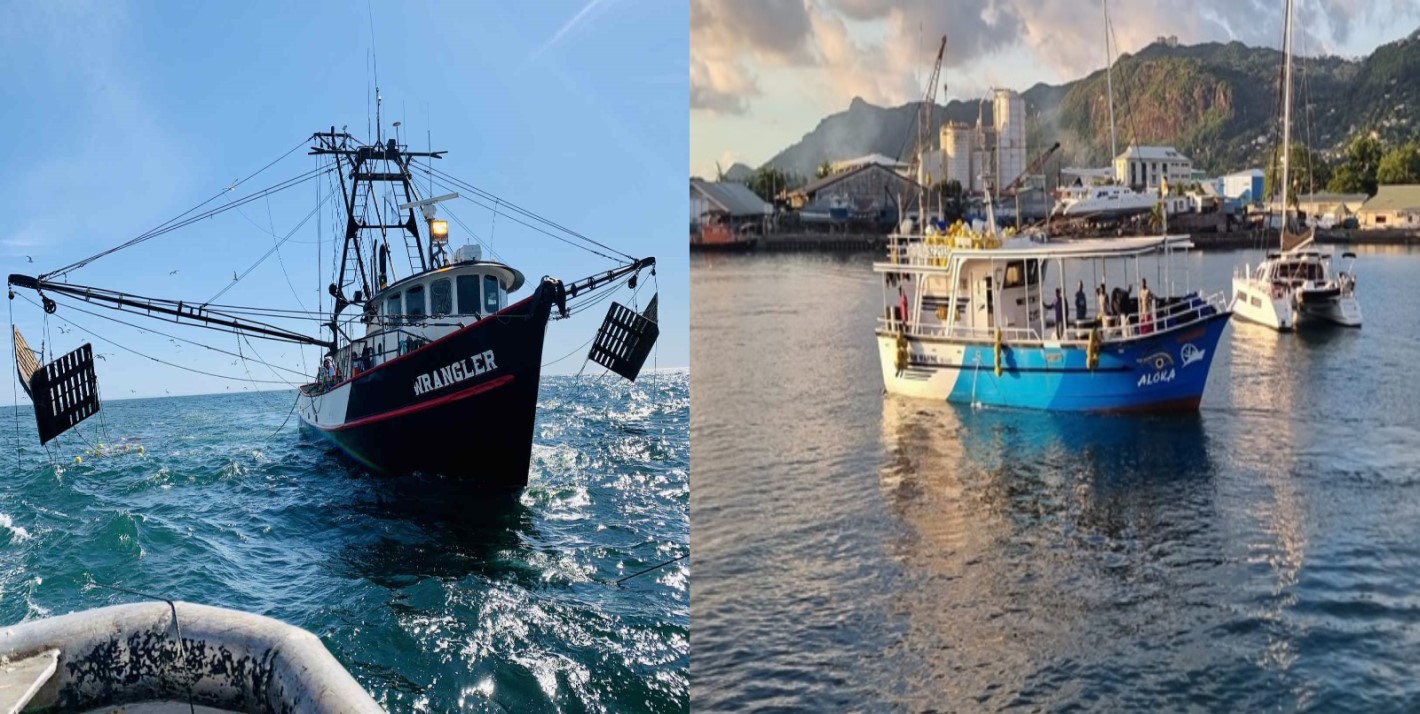
Semi-industrial fishing - meaning and illustration
📘 TABLE OF CONTENTS
⌚ Reading time:
📆 Last modified:
2025-02-27 19:25:55
1. Synonyms, etymology, translation, definition, examples and notes
1.1. IPA transcription and prononciation for semi-industrial fishing: 🔊
Semi-industrial fishing: /ˈsemɪ ɪnˈdʌstrɪəl ˈfɪʃɪŋ/1.2. Etymology of Semi-industrial fishing:
The term " semi - industrial fishing " was formed from three words: semi + industrial + fishing. "Semi - industrial fishing " originated in the mid-20th century. One of the earliest books mentioning "police de la navigation" was published in 1961:
- A Guide to South Pacific Fisheries. By H. van Pel · published in 1961. Used in page 62.
- The Freedom from Hunger Campaign (FFHC); Outboard Mechanization Projects in Dahomey and Togo Issues 80-82 By Øyvind Gulbrandsen · published in 1968. Used in page 17, in the excerpt : "... semi - industrial fishing from the port …"
1.3. 🇫🇷 French translation of semi-industrial fishing:
- Pêche semi-industrielle
1.4. Definition of semi-industrial fishing in fisheries:

Semi-industrial fishing : Fishing carried out in the public inland waterways or around the shore using small and/or medium-size vessels of less than ten (10) gross registered tonnes and gear of the same type as those used for industrial fishing, and using an outboard engine typically more than thirty (30) horsepower, or an inboard engine with no more than fifty (50) horsepower.
1.5. Plural of semi-industrial fishing:
Semi-industrial fishing;
2. Notes on semi-industrial fishing
Characteristics of Semi-industrial Fishing
Semi-industrial fishing occupies a crucial middle ground in the fishing industry. It bridges the gap between small-scale artisanal practices and large-scale industrial operations, often offering a more sustainable and locally focused approach (FAO, 2020, p. 45). But what exactly is semi-industrial fishing, and why is it gaining traction in the context of responsible resource management? Let's dive in.
Semi-industrial fishing uses slightly more powerful fishing efforts than artisanal fishing. Small boats are no longer used, like in the case of artisanal fishing, but specialised and more powerful fishing vessels such as trawlers. The fishermen are no longer people who have learnt on the job over generations, but real professionals who have learnt the different fishing methods at a fishing academy.
Vessel Size and Type: Semi-industrial vessels are generally larger than those used in artisanal fishing but smaller than industrial vessels. Depending on the region and specific practices, they can range from about 14 to 50 meters in length. For instance, in Seychelles, semi-industrial vessels typically measure around 16 meters (FAO, 2021). Fishing boats (trawlers) vary in size (from about 14m to up to 50 m, depending on the nation), and stay out of port for long periods (over 10 days) and can have crews of up to 20 people...
Fishing Techniques and Gear: Semi-industrial fishing employs more advanced gear and techniques than artisanal fishing. This includes the use of monofilament longlines for targeting species like swordfish and tuna, as well as trawling with medium-sized trawlers (Kelleher, 2005).
Management and Development: Efforts to modernize fisheries by transitioning to semi-industrial practices are underway in several regions, such as Cameroon, to improve efficiency and address regulatory challenges (World Bank, 2019).
Operational Complexity: Managing semi-industrial fishing operations is akin to running a business, requiring strategic decisions that can have immediate financial consequences (Béné et al., 2016).
Market and Catch: The catch from semi-industrial fishing is often divided between local consumption and export markets. In Seychelles, for example, the semi-industrial fishery targets high-value species like swordfish and tuna, leading to significant annual landings (FAO, 2021).
Environmental Impact: Semi-industrial fishing can result in bycatch, including juveniles of target species and non-commercial species, which can have ecological impacts. Technologies to reduce bycatch are being explored in some regions to mitigate these effects (Hall et al., 2000).
Medium-sized vessels: Larger than those used in artisanal fishing but smaller and less powerful than industrial vessels (Garcia & de Leiva Moreno, 2003, p. 22).
Modern, but not fully automated, technology: Utilizing technologies like sonar, GPS, and more efficient nets, but often relying on manual labor for key tasks (Smith, 2017, p. 88).
Targeted species: Often focusing on specific species, leading to less bycatch compared to indiscriminate industrial fishing (Alverson et al., 1994, p. 112).
Local economies: Contributing significantly to local economies by employing local fishermen and supporting related industries (Pollnac, 2000, p. 30).
Limited geographical range: Operating within national waters or designated fishing zones, limiting the environmental impact of extensive travel (OECD, 2012, p. 64).
Overall, semi-industrial fishing represents a middle ground between artisanal and industrial fishing, balancing local needs with advanced fishing methods and technologies.
Related: Differences between artisanal, semi-industrial and industrial fishing
Significance of Semi-Industrial Fishing Important?
Semi-industrial fishing offers a potential pathway to a more balanced and sustainable future for the fishing industry. Here's why:
Reduced Environmental Impact: Compared to industrial fishing, semi-industrial operations often have a smaller ecological footprint due to targeted fishing, less habitat destruction, and reduced fuel consumption (Worm & Hilborn, 2013, p. 146).
Support for Coastal Communities: By providing livelihoods for local fishermen and supporting related industries, semi-industrial fishing strengthens coastal communities and preserves traditional fishing knowledge (Jensen, 2015, p. 101).
Improved Food Security: Semi-industrial fishing contributes to local and regional food security by providing access to locally sourced seafood (Béné, 2006, p. 5).
Better Management and Regulation: Smaller fleets are generally easier to monitor and regulate than large industrial fleets, facilitating better enforcement of fishing regulations and conservation efforts (Charles, 2001, p. 155).
Flexibility and Adaptability: Semi-industrial operations are often more adaptable to changing environmental conditions and market demands compared to large, inflexible industrial operations (Pomeroy, 2003, p. 72).
Challenges and Considerations:
While offering numerous benefits, semi-industrial fishing also faces its share of challenges:
Overfishing: Despite targeting specific species, overfishing can still occur if fishing effort is not properly managed (Pauly et al., 2002, p. 691).
Bycatch: Although typically lower than industrial fishing, bycatch remains a concern and requires continuous mitigation efforts (Anderson, 2011, p. 130).
Access to Capital and Technology: Semi-industrial operations often face challenges in accessing the capital and technology needed to improve efficiency and sustainability (Kurien, 1995, p. 8).
Competition from Industrial Fishing: Large-scale industrial fishing can often outcompete semi-industrial operations, impacting their profitability and sustainability (Bailey & Jentoft, 1990, p. 335).
Effective Enforcement: Strong enforcement of fishing regulations is crucial to prevent illegal fishing and ensure sustainable practices (Sutinen & Johnston, 2003, p. 3).
Keywords for a Sustainable Future:
Here are some keywords that are crucial for the success of semi-industrial fishing:
Sustainable fishing practices: Emphasizing selective fishing, reduced bycatch, and responsible resource management.
Quota management: Implementing effective quota systems to prevent overfishing.
Marine protected areas (MPAs): Establishing MPAs to protect critical habitats and allow fish stocks to recover.
Eco-labeling: Promoting eco-labeled seafood to encourage consumer demand for sustainably caught fish.
Traceability: Implementing traceability systems to track seafood from catch to plate, ensuring transparency and accountability.
Community-based management: Empowering local communities to participate in the management of their fisheries.
Technology adoption: Investing in technologies that improve fishing efficiency, reduce bycatch, and enhance monitoring capabilities.
Conclusion:
Semi-industrial fishing represents a promising pathway toward a more sustainable and equitable future for the fishing industry. By embracing responsible management practices, supporting local communities, and investing in innovative technologies, we can unlock the full potential of this vital sector and ensure healthy oceans for generations to come.
Varying size of semi-industrial fishing vessels across regions
The main difference between semi-industrial and industrial fishing vessels is that the former involves the use of medium-sized vessels. The key factor, ‘medium-size’, is interpreted differently across fisheries authorities in the world. That said, the size range of semi-industrial fishing vessels varies considerably across regions. What is termed medium-sized in a nation may be classified as a large vessel in another region.
In Ghana, locally built wooden fishing vessels generally range in length from 8 - 37m, with in-board engines of up to 400 hp. Two types of vessels by length operate in this fishery: 8 - 12m are termed small vessels and larger vessels are 12 - 37m.
In Seychelles, the Seychelles Fishing Authority established medium-size vessels ranging from 14 to 23 metres in length, which are used for semi-industrial fishing.
In Central Africa, specifically in Cameroon, semi-industrial fishing is carried out by small and/or medium-sized vessels ranging from about 14 to 23 metres in length, equipped with fishing gear and fitted out with a mechanised system to operate the fishing gear
References 📔
References on Characteristics of Semi-industrial Fishing
Béné, C., Macfadyen, G., & Allison, E. H. (2016). Increasing the Contribution of Small-Scale Fisheries to Poverty Alleviation and Food Security. FAO.
FAO. (2021). The State of World Fisheries and Aquaculture 2020. Food and Agriculture Organization of the United Nations.
Hall, M. A., Alverson, D. L., & Metuzals, K. I. (2000). Bycatch: Problems and Solutions. Marine Pollution Bulletin, 41(1-6), 204-219.
Kelleher, K. (2005). Discards in the World’s Marine Fisheries: An Update. FAO Fisheries Technical Paper No. 470.
World Bank. (2019). The World Bank's Support to Fisheries: A Review of Its Effectiveness. World Bank Publications.
References
Alverson, D. L., Freeberg, M. H., Murawski, S. A., & Pope, J. G. (1994). A global assessment of fisheries bycatch and discards. FAO Fisheries Technical Paper, (339).
Anderson, L. G. (2011). Economics of fisheries management. John Wiley & Sons.
Bailey, C., & Jentoft, S. (1990). Hard choices in fisheries development. Marine Policy, 14(4), 333-344.
Béné, C. (2006). Fish and food security in developing countries. Agriculture and Food Security, 1(1), 4.
Charles, A. T. (2001). Sustainable fishery systems. Blackwell Science.
FAO. (2020). The State of World Fisheries and Aquaculture 2020. Rome.
Garcia, S. M., & de Leiva Moreno, I. (2003). Responsible fisheries in the marine ecosystem. FAO Fisheries Technical Paper, (443).
Jensen, J. L. (2015). Marine protected areas and fisheries. Earthscan.
Kurien, J. (1995). Towards an alternative to the blue revolution: Social and ecological costs of export-oriented shrimp farming in India. Bulletin of Concerned Asian Scholars, 27(1), 3-17.
OECD. (2012). Supporting the sustainable development of the fisheries sector. OECD Publishing.
Pauly, D., Christensen, V., Dalsgaard, J., Froese, R., & Torres, F. (2002). Towards sustainability in world fisheries. Nature, 418(6898), 689-695.
Pollnac, R. B. (2000). Poverty assessment of small-scale fisheries. FAO Fisheries Circular, (956).
Pomeroy, R. S. (2003). Policies and management for sustainable coastal tourism. CABI.
Smith, T. D. (2017). Managing fisheries: Sustainability through collaboration. Springer.
Sutinen, J. G., & Johnston, R. J. (2003). Enforcement of fisheries regulations. Marine Policy, 27(1), 1-12.
Worm, B., & Hilborn, R. (2013). Rebuilding global fisheries. Science, 341(6153), 145-147.
 Linkedin
 share
share tweet
tweetLEAVE A COMMENT