Read entire PDF
Opens in new tab ↗️


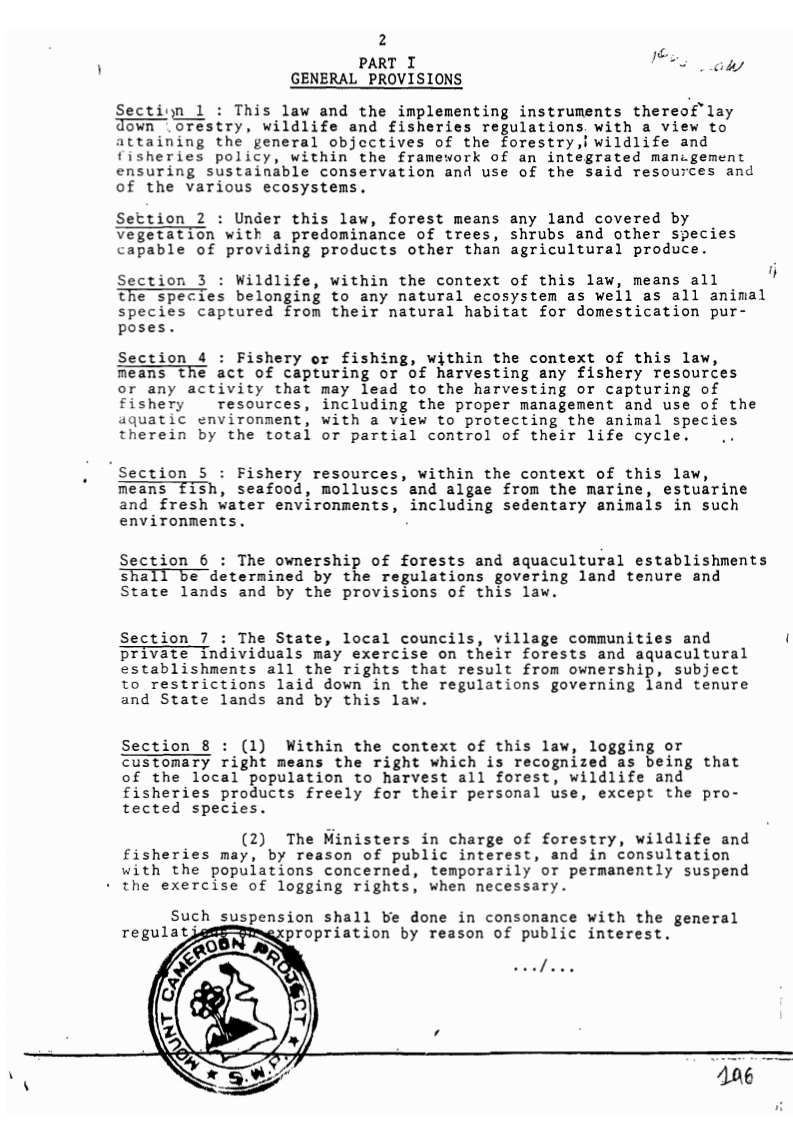
" Fishery or fishing, within the context of this law, means the act of capturing or of harvesting any fishery resources or any activity that may lead to the harvesting or capturing of fishery resources, including the proper management and use of the aquatic environment, with a view to protecting the animal species therein by the total or partial control of their life cycle."
DEFINITION OF TERMS IN THIS CLAUSE
➡ Refers to the various restrictions (measures) that managers can impose to regulate fishing.
➡ Refers to the joint France-Cote d´Ivoire-Senegal fleet that targets tropical tunas off Africa.
➡ harvest of uncultured fish from water bodies.
➡ cold-blooded aquatic vertebrate with gills, no digits, and no limbs other than fins which swims by using its fins and tail.
➡ person who engages in fishing activities, or is employed or engaged in any capacity or carrying out an occupation on board any fishing vessel, including persons working on board who are paid on the basis of a share of the catch but excluding pilots, naval personnel, other persons in the permanent service of a government, shore-based persons carrying out work aboard a fishing vessel and fisheries observers.
➡ any activity related to the culture, management, harvest, processing or marketing of aquatic animals (finfish, shellfish, molluscs, crustaceans, etc.) or plants (seaweeds, alga, etc.).
➡ Any harvestable natural or cultured living resource (fish, crustaceans, molluscs and algae) from marine, estuarine and fresh water environments, living in the water or on the seabed (sedentary organisms).
➡ Sector or activity of harvesting fish from the wild.
➡ to take, catch, gather, kill or obtain fishery resources from water, land or any rock or other matter.




Please log in or register to access this content. Logging in will grant you acess to subscriber contents like unlimited access to our articles, glossaries, lexicons, quizzes, downloads, forum participation, etc.