Read entire PDF
Opens in new tab ↗️


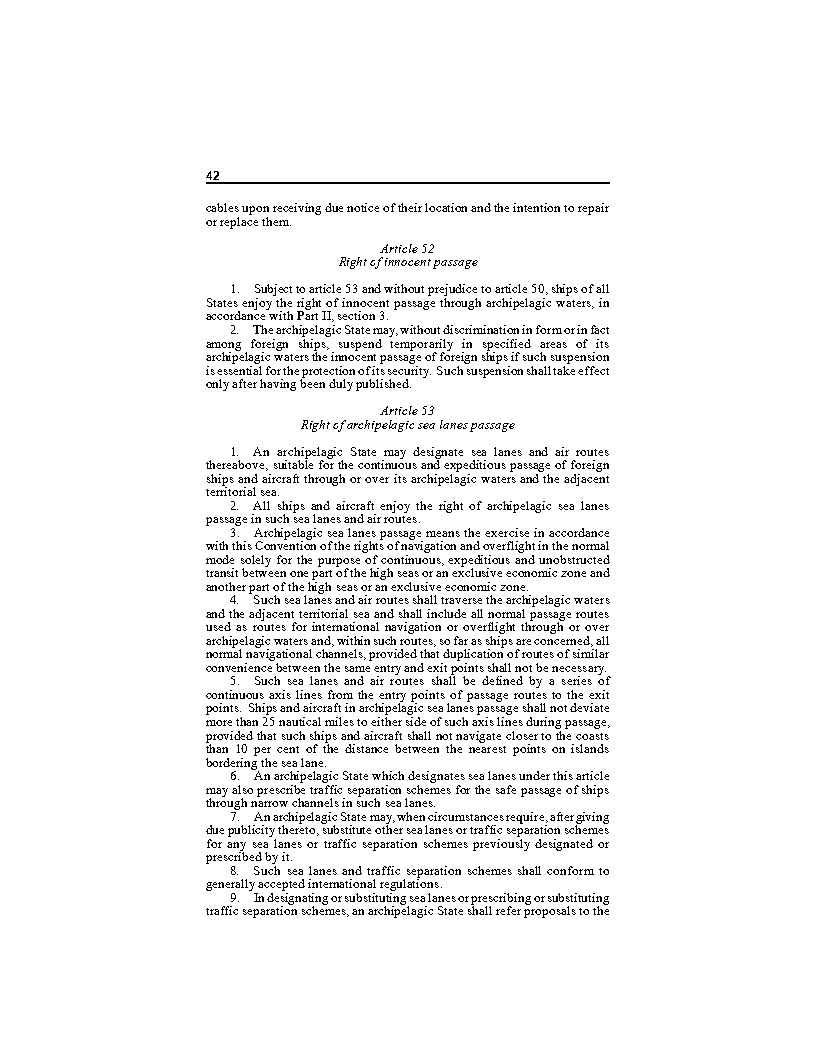
" Such sea lanes and air routes shall traverse the archipelagic waters and the adjacent territorial sea and shall include all normal passage routes used as routes for international navigation or overflight through or over archipelagic waters and, within such routes, so far as ships are concerned, all normal navigational channels, provided that duplication of routes of similar convenience between the same entry and exit points shall not be necessary."
DEFINITION OF TERMS IN THIS CLAUSE
➡ Passage means navigation through the territorial sea for the purpose of: a) traversing that sea without entering internal waters or calling at a roadstead or port facility outside internal waters; or (b) proceeding to or from internal waters or a call at such roadstead or port facility.
➡ A species that lives in midwater or close to the surface.
➡ the salt water that covers most of the earth's surface and surrounds its continents and islands
➡ an official route at sea usually designate or prescribe by the coastal State for the regulation of passage traffic. It is regularly used by ships and other sea vessels during passage.
➡ a large boat that carries people or goods across the seas or oceans
➡ a liquid without colour, smell or taste that falls as rain, is in lakes, rivers and seas, and is used for drinking, washing, etc




Please log in or register to access this content. Logging in will grant you acess to subscriber contents like unlimited access to our articles, glossaries, lexicons, quizzes, downloads, forum participation, etc.