


Macrobrachium rosenbergii - meaning and illustration
📘 TABLE OF CONTENTS
⌚ Reading time:
📆 Last modified:
2026-04-06 22:30:53
1. Synonyms, etymology, translation, definition, examples and notes
1.1. IPA transcription and prononciation for macrobrachium rosenbergii: 🔊
[MAK-roh-BRAY-kee-um ROH-zen-BUR-ghee-eye]
Syllable Breakdown
To make it easier, let’s look at each part of the name individually:
-
Macro-:
MAK-roh(like "macro" in economics) -
-brachium:
BRAY-kee-um(the "ch" is a hard "k" sound, as in "anchor") -
rosen-:
ROH-zen(rhymes with "chosen") -
-bergii:
BUR-ghee-eye(the "g" is hard like in "goat," and the ending rhymes with "pie")
Note: You might occasionally hear people say
BUR-jee-eye(with a soft "j" sound), but in botanical and zoological Latin, a hard "g" is generally preferred for names derived from German surnames like "Rosenberg."
1.2. Synonyms of macrobrachium rosenbergii:
3 international synonym(s) for macrobrachium rosenbergii. Notably:
- 🍧 Giant freshwater prawn 🔊 ⏸•ılıılıılııl 0
- 🍧 Giant river prawn 🔊 ⏸•ılıılıılııl 0
- 🍧 Golda Chingri 🔊 ⏸•ılıılıılııl 0
1.3. 🇫🇷 French translation of macrobrachium rosenbergii:
- Macrobrachium rosenbergii
- Bouquet géant
- Crevette géante d'eau douce
1.4. Definition of macrobrachium rosenbergii in fisheries:

Macrobrachium rosenbergii, also known as Giant freshwater prawn, giant river prawn or Golda Chingri, means:
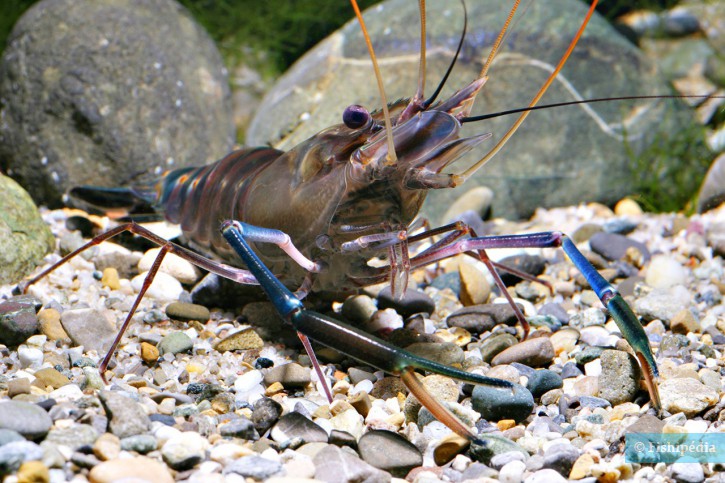
a large, nocturnal, bottom-dwelling (benthic), omnivorous, commercially significant species of palaemonid prawn found in tropical and subtropical regions of the Indo-Pacific area, from Class: Crustacea, Order: Decapoda, Family: Palaemonidae, recognised by its long, prominent second walking legs (chelipeds) which are often blue or orange, and a long upward-curving rostrum with 11–14 dorsal teeth and 8–10 ventral teeth.
1.5. Plural of macrobrachium rosenbergii:
Giant river prawns; Giant freshwater prawns;
2. Notes on macrobrachium rosenbergii
Fishery terminology records for Macrobrachium rosenbergii
 Linkedin
 share
share tweet
tweetLEAVE A COMMENT